
One of the biggest frustrations in trading is the feeling that you constantly need to watch the market. Many traders spend hours monitoring charts, managing positions manually, and reacting emotionally to every move.
Automation changes this by turning strategy execution into a structured process instead of a constant stream of manual decisions.
The goal is not to “set and forget” trades completely. Instead, automation helps reduce constant oversight by using predefined rules for entries, exits, risk management, and trade monitoring.
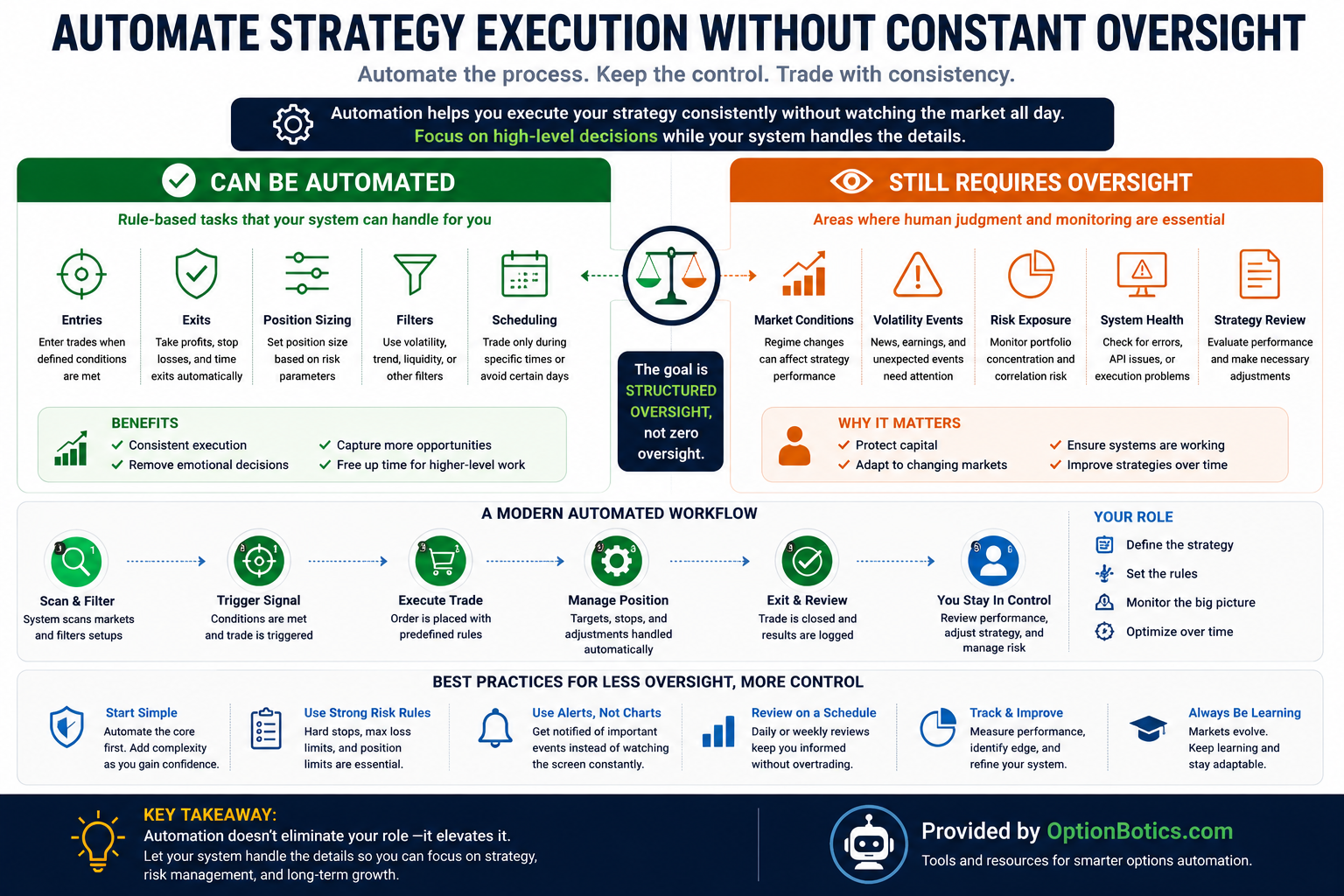
Infographic: which parts of strategy execution can be automated and which areas still require oversight.
Why Manual Oversight Becomes a Problem
Manual trading often creates inconsistent execution because decisions are made in real time under pressure.
Common problems include:
- Watching charts all day waiting for setups
- Entering trades too late
- Changing exit plans emotionally
- Managing positions inconsistently
- Missing opportunities when away from the screen
Over time, this constant monitoring creates emotional fatigue and makes it difficult to follow a consistent process.
What Strategy Execution Actually Includes
Most traders think strategy execution simply means entering a trade, but it involves much more than that.
A complete trading workflow often includes:
- Scanning for setups
- Filtering trades based on conditions
- Selecting strikes or position types
- Managing risk exposure
- Monitoring exits and profit targets
- Adjusting behavior during changing market conditions
Many of these tasks can be automated using rule-based systems.
What Can Realistically Be Automated
Modern automation tools allow traders to automate large portions of strategy execution without needing to constantly monitor positions.
Common examples include:
- Entering trades automatically when conditions trigger
- Applying profit targets and stop-loss rules
- Filtering trades based on volatility or trend conditions
- Limiting position size and portfolio exposure
- Closing positions before expiration
- Avoiding trades during earnings or major events
For a broader overview of building rule-based systems, see how to automate options trading without coding.
What Still Requires Oversight
Automation can reduce manual oversight significantly, but it does not eliminate the need for monitoring completely.
Traders should still oversee:
- Major market regime changes
- Unexpected volatility events
- Portfolio concentration risk
- Broker or API failures
- Strategy performance degradation over time
The goal is structured oversight—not total detachment from the market.
How Traders Reduce Constant Monitoring
Most successful automation workflows focus on reducing unnecessary screen time while maintaining control over risk.
This is typically done by:
- Using alerts instead of watching charts continuously
- Defining clear entry and exit rules in advance
- Monitoring dashboards periodically instead of constantly
- Applying portfolio-level risk controls
- Reviewing systems on scheduled intervals
This creates a more sustainable trading process while still allowing traders to respond when necessary.
Why Risk Management Matters Even More with Automation
Automation increases consistency—but consistent execution of a poor strategy can still produce losses.
Because of this, risk management becomes even more important in automated systems.
Good automated systems typically include:
- Position sizing limits
- Maximum portfolio exposure controls
- Profit targets and stop-loss rules
- Drawdown safeguards
For more on protecting automated systems from large losses, see trading bot risk management.
Common Mistakes When Automating Strategy Execution
1. Treating Automation Like “Set and Forget”
Markets change constantly. Systems still require oversight and adjustment over time.
2. Overcomplicating the Strategy
Too many rules can make systems fragile and difficult to maintain.
3. Ignoring Risk Controls
Without proper limits, automation can scale mistakes as easily as profits.
4. Failing to Test Properly
Strategies should always be backtested and validated before live deployment.
Using Automation with Options Strategies
Automation works especially well with structured options strategies because many decisions can be defined clearly in advance.
Examples include:
- Credit spreads
- Iron condors
- Momentum systems
- Breakout strategies
These strategies become more consistent when entries, exits, and risk rules are executed systematically instead of emotionally.
Final Thoughts
Automation helps traders reduce constant manual oversight by turning strategy execution into a structured, rule-based process.
Instead of reacting emotionally to every market move, traders can focus on refining strategies, managing risk, and reviewing performance over time.
The most effective systems are not completely hands-off—they combine automation with intelligent oversight and disciplined risk management.
If you want to explore how traders are building rule-based systems that reduce manual monitoring, review the tools and workflows featured on OptionBotics.com.