
Iron condors are one of the most popular options strategies for generating consistent income – but executing them manually can be inconsistent.
This is where automation can make a meaningful difference. By turning an iron condor strategy into a rule-based system, traders can remove emotion, standardize entries, and manage risk more effectively.
This guide breaks down how an automated iron condor strategy works, including setup, rules, and risk considerations.
What Is an Iron Condor Strategy?
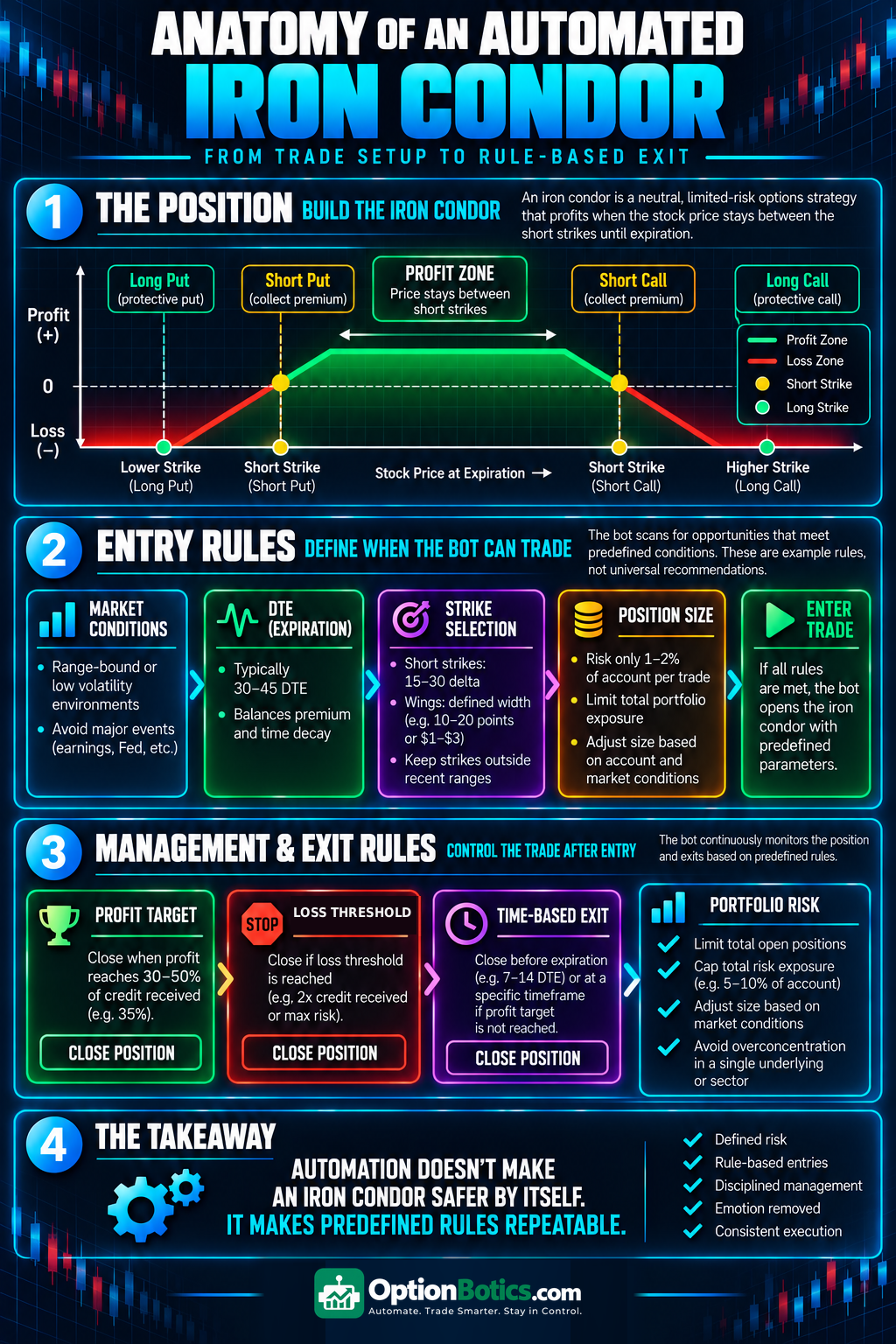
An iron condor is a neutral options strategy that profits when the underlying asset stays within a defined price range.
It is constructed using two credit spreads:
The goal is for price to remain between the two short strikes, allowing the trader to collect premium as time passes.
Why Iron Condors Work Well with Automation
Iron condors are naturally rule-based, making them ideal for automated trading systems.
Automation allows traders to:
Instead of manually deciding when to open positions, a system can follow the same logic every time.
For a broader overview of automation, see how to automate options trading without coding.
Core Rules for an Automated Iron Condor Strategy
A rule-based iron condor needs more than instructions to simply open four option legs. The system needs to define when a trade qualifies, which strikes to use, and how much capital to risk.
Entry Conditions
Most automated systems define when to enter based on market conditions.
- Implied volatility above a defined level
- Price not near major support or resistance
- Sufficient time to expiration (e.g., 30–45 days)
Strike Selection
Strikes are often chosen based on delta or probability of expiring out of the money.
- Short strikes placed at lower delta levels (e.g., 15–30 delta)
- Wings sized to control maximum risk
Position Sizing
Each position should risk a small portion of the account to prevent large drawdowns.
Proper risk control is especially important when running multiple positions at once. See trading bot risk management for a deeper breakdown.
Automating Entries and Execution
In a rule-based system, entries are triggered automatically when predefined conditions are met.
For example, a bot might:
This ensures that trades are entered consistently, without hesitation or timing errors.
Want to put a rule-based iron condor strategy into practice? The automation platform we use and recommend lets options traders build bots around predefined entry conditions, position sizing, multi-leg options strategies, and automated trade management.
Managing and Exiting Positions
Exit rules are just as important as entries in an automated system.
Common exit conditions include:
Without structured exit rules, even profitable strategies can become inconsistent. You can learn more about this in automated exit strategies.
How Market Conditions Affect Performance
Iron condor strategies perform differently depending on market conditions.
Understanding market structure is key to choosing when to run this strategy.
For example, some traders use tools like gamma exposure analysis to better understand price behavior.
Common Mistakes with Automated Iron Condors
Common Questions About Automated Iron Condor Strategies
Are iron condors good for automation?
Yes. Their structured nature makes them one of the easier options strategies to translate into predefined automation rules.
What is the best expiration for iron condors?
Many traders use 30–45 days to expiration, but this can vary based on the strategy.
Can iron condors lose money?
Yes. Large price moves can cause losses, especially in trending markets.
How do you reduce risk with iron condors?
By limiting position size, managing exposure, and using defined exit rules.
Consistency Comes From the Rules, Not the Setup Alone
An automated iron condor strategy can provide consistent income when executed with discipline and proper risk management.
The key is not just finding a setup – but building a system that applies the same rules across every trade.